- Culture Corner
- Posts
- Would Cleopatra Leave You on Read?
Would Cleopatra Leave You on Read?

Mirna Abdulaal
August 20, 2025 • Reading Time: 18 minutes

This is our culture corner. Your weekly Egyptian cultural compass.

Hey there,
We’re curious, what’s the last book you read that truly stayed with you? We’d love for you to hit reply and share it with us, and maybe even add it to our ‘What to Read’ section.
We’re bringing up books in this edition because, honestly, the world could always use a little more reading and a little less doomscrolling. And if we look back, the ancient Egyptians were already ahead of us. They were lovers of the spoken word, especially when it came to expressing romance, longing, and desire. As Egyptologist Richard Parkinson once said, “Poetry is perhaps the greatest forgotten treasure of ancient Egypt.”
Women’s voices rang powerfully through these poems, whether as narrators shaping the story or as lovers choosing their beloved. So, if you’re deciding whether to let that summer fling fade or let it linger a little longer, you might just find the perfect words hidden in Egyptian love poetry.
We hope you enjoy the read, and have a wonderful weekend!
Warm regards,
Mirna Abdulaal
The time and effort behind this newsletter come from the Egyptian Streets team of independent, grassroots journalists. By subscribing for just USD 1.66 per month (EGP 80), or as little as USD 0.84 per month (EGP 40) for students (paid annually), you’re directly supporting the creation of content like this and helping sustain independent media in Egypt.
Support our work and subscribe by clicking here.
Spotlight

Meet Maha Hobeldin
To live is one thing, and to feel is another. To hold both together, in balance, and in harmony, is the essence of being an artist. An artist is one who dares to dream without the weight of reality pulling them back, who wanders freely through imagination without fear of judgment, yet still lives among people, grounded in the everyday.
What sets them apart is the ability to gather the fragments of life, seal them like messages in a bottle, and later uncork them to paint, to create, to sip from life’s glass again and again.
Egyptian artist Maha Hobeldin does exactly this. She drinks in life and pours it back onto the canvas, each brushstroke carrying more than what the human eye can register, but what the human eye registers. More than poetry, more than story or film, her work reaches for what lingers in silence; the unspoken, the overlooked moments that slip past while we are busy living, but never fully feeling, the lives we lead.
Deconstructing reality, Maha dismantles structures and forms to uncover the emotions hidden within them. For her, destruction is not an end but a space where raw, unpolished feelings emerge, far from the perfection of architecture or anatomy. She approaches life the way one gazes at a vast night sky, where scattered stars and planets are suspended in their own dimension, yet together forming a universe of meaning.
Speaking to Egyptian Streets, Maha shared more about her cultural picks and work below:
What routines or rituals help spark your creativity?
I always have to set the mood before I paint. There needs to be natural light, a connection to nature if possible, and definitely music. And I have to be alone. I usually listen to traditional Persian music, or symphonies, or Hans Zimmer, especially the Interstellar soundtrack. I’ve always been fascinated by astronomy, and that music feels like stepping into another dimension.
The music has to connect to the experience I want to create. It has to be related to the painting, something that strikes a chord and moves me. The music moves my hand, it guides the flow of the painting. Sometimes I listen to the same track over and over until the painting is finished. I lose myself in it, and the flow never breaks.
I also like to document my artistic process, capturing these intense emotional moments and turning them into short Instagram reels.
How did you come to develop your unique artistic style?
My unique style began to take shape back in college, around 15 years ago, when I studied interior architecture. I used to sketch interiors and landscapes, and my hand naturally leaned toward cubism and geometric forms. I was fascinated by deconstruction, breaking shapes apart.
In the beginning, my work was still developing, but gradually I started creating my own abstract lines. I was never interested in realism. I have a wild imagination, and I see things others don’t. I didn’t want to simply recreate reality on canvas. Studying Picasso pushed me further into deconstruction and cubism. But unlike him, I wanted to move beyond shapes and focus on raw emotion.
My color palette has also evolved. At first, I worked with broad ranges, like blues that carried both sadness and happiness, expressing universal emotions. More recently, I’ve become more intentional, narrowing down my palette. I can now feel specific emotions in colors: hope in purple, sorrow in yellow, renewal in green. I no longer feel the need for a wide spectrum, just the few that express what I’m feeling in that moment.
Are there particular emotions that guide or influence you while painting?
All of my paintings are rooted in emotion. They are either based on my own personal experiences, or on something someone else went through that I witnessed and felt deeply. I’m a very empathetic and emotional person, so I naturally absorb other people’s feelings. I can’t paint something I don’t feel.
At one point, I painted a self-portrait without even realizing it until I was finished. It came during a transitional period in my life, when I was ready to let go and move on. That painting is not for sale, it’s mine. It represents that moment of release. Now, I am at a stage in my life where it is time to fly.
I don’t enjoy when a client asks me to copy or emulate something. Just tell me what you want to express, and I’ll let my imagination guide me. Every painting holds a specific emotion, most often about love, heartbreak, and the deep emotions that pull us forward.
When I hold exhibitions, I notice that people often lose themselves in the artwork. They don’t just see the colors, they feel the painting. Each person connects to it in their own way, and that’s the most powerful part.
Are there Egyptian artists that have influenced you?
I never looked at an artist and thought about where they came from. What mattered was how their work made me feel. Abdel Hadi El Gazzar was one Egyptian artist who deeply inspired me, his imagination was pure genius. I also admire Hady El Borai, as well as global artists like Picasso, whose cubism speaks to me, and Dalí, whose surrealism fascinates me.
Outside of painting, I also draw inspiration from cinema. Christopher Nolan, for example, has this ability to pull you out of reality and make you think in new dimensions, and that’s exactly what art should do.
Is there a project that holds special meaning for you, and why does it stand out?
One of the projects I’m most proud of is a painting I created for director Tamer Ashry. At the time, I didn’t know who he was, he came to me through a mutual friend, and he wanted a painting about his life.
I spent over a year studying his work, watching his films, and listening to the music he shared with me. To me, a person’s playlist is the sound of their soul, and it became the key to understanding him. The process was emotional, and sometimes overwhelming, and I had to pause to regain balance. But he encouraged me to take my time, and I was able to complete it after a year and a half.
When the painting was finally complete, he was moved by it and was lost in its details. We called it The Alchemist because it captured both his story and his spirit.
Feature

Habaytak
Egyptians love love. The love that flickers on television screens and fills the pages of books. But love, in our world today, is rarely only gentle or romantic. For many across the region, it carries heavier meanings: the ache of distance, the weight of survival, the longing that lingers even in the shadow of conflict.
It can appear in the smallest gestures, in letters written by hand, in songs, in stolen moments that slip through the cracks of public life. Tender or complicated, forbidden or fragile, love endures. It insists on existing, even when exile, displacement, or unspoken rules try to silence it.
From Sameh Alaa’s ‘I Am Afraid to Forget Your Face’ to Kawthar Younis’ ‘Sahbety (My Friend)’, these films reveal both the beauty and the barriers of intimacy in Egyptians’ life. Together, they show that Egyptian youth do not merely stumble into love, rather; they choose it, demand it, and carry it forward.
Just Friends…Or Not
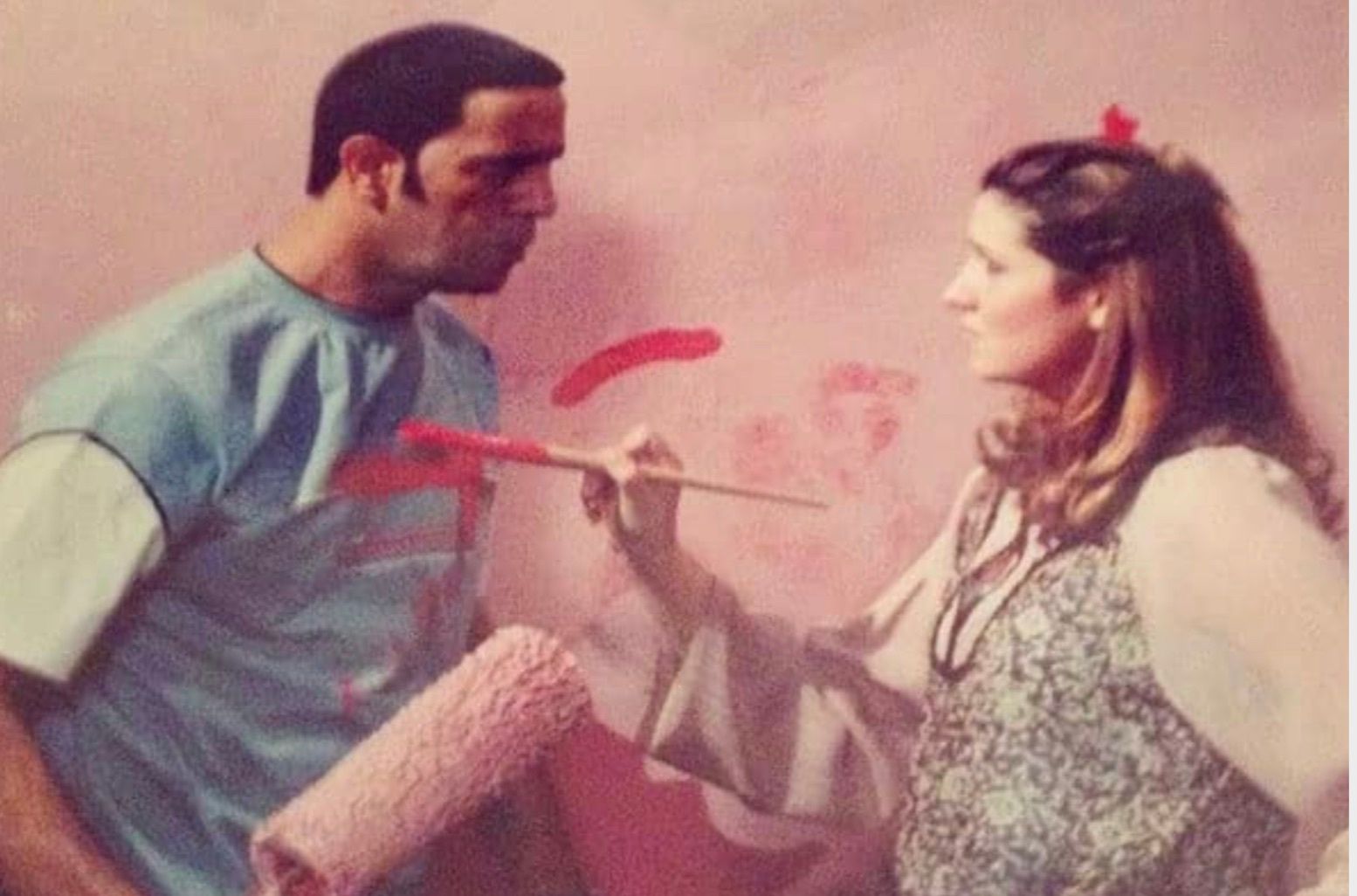
In Egypt, saying “we’re just friends” between men and women often doesn’t land as simply as it sounds. There is a deeply ingrained skepticism surrounding male–female friendships, with many people quick to assume there must be hidden romantic or sexual intentions. In the Egyptian context, such assumptions become amplified by social norms, expectations around gender roles, and the pressures of family and community judgment.
Something as ordinary as mentioning a male friend can lead to a cascade of questions, innuendo, or suspicion. The act of repeatedly clarifying, “No, really—we’re just friends,” becomes not just a defense of one relationship, but a defense of the very possibility of platonic connection. It reveals how friendship itself is often undervalued when it comes to men and women; intimacy is too often equated only with romance, ignoring the depth that friendship can hold.
You can challenge this mindset by reclaiming the word "platonic" with emphasis. Normalizing platonic male-female friendships widens society's view of love, intimacy, and human connection.
Friendship is just as important as romance, and sometimes, it can be just as strong.
What to Read

Love Poems
Love raises more questions than it answers. It asks us to be honest with ourselves, to uncover what we truly cherish and what we cannot hold onto. At its heart, love feels like a slow prayer, always telling us to linger in the beauty of each passing moment.
Perhaps this is why poetry captures it so well: it doesn’t rush, but instead gives us the space to reflect, to pause, to see love from many angles. These ancient Egyptian poems, gathered here, can be your gentle companion in the evening; a way to unwind after the day, to read slowly, and to let love’s meanings unfold.
What to Listen to

Nefsy Ahbek
Most love songs today swing between two extremes: upbeat pop anthems you dance to, or raw heartbreak ballads that leave you in pieces. Cairokee’s “Nefsy Ahbek” doesn’t sit in either; it carves out its own space. The song feels soft and dreamy, but underneath that gentleness are lyrics heavy with longing, describing a love that always feels just out of reach.
One of the most beautiful parts of the song is its imagery. The line “I want to love you like the sea wave, a love that only ends on the shore” is so beautiful that it leaves you wanting for more. It describes a love that keeps moving, keeps trying, until it finally finds where it belongs.
Musically, “Nefsy Ahbek” is understated in the best way. It leaves space for you to really sit with the emotions, and to reflect on the “what ifs,” or for thinking about the loves that almost happened.
What to Watch


Seeb Wana Aseeb
A runaway bride… and a plot twist. Seeb Wana Aseeb (Tit for Tat) is a fun Egyptian rom-com that centers on Nabila (Hanhah El-Zahed), a fashion designer who fled her wedding in Egypt, only to reinvent herself in Lebanon, until a proposal from her new beau leads her back home, where she discovers she’s technically still married to her ex-fiancé, Ibrahim (Ahmed El-Saadany)
Bold, colorful, and full of personality. The show stands out with its bright visuals, especially Nabila’s bold wardrobe, which mirrors the strong, quirky traits of its characters, including eccentric side characters like Ibrahim’s laid-back lawyer friend or the comically incompetent villainous henchman.
It delivers heaps of Egyptian comedy through playful pranks and the humorous, petty battles between the exes. Seeb Wana Aseeb also thoughtfully touches on themes like social expectations around masculinity and marriage, class tensions, “the foreigner’s complex” (o’dat el khawaga), and the pressure to protect reputations.
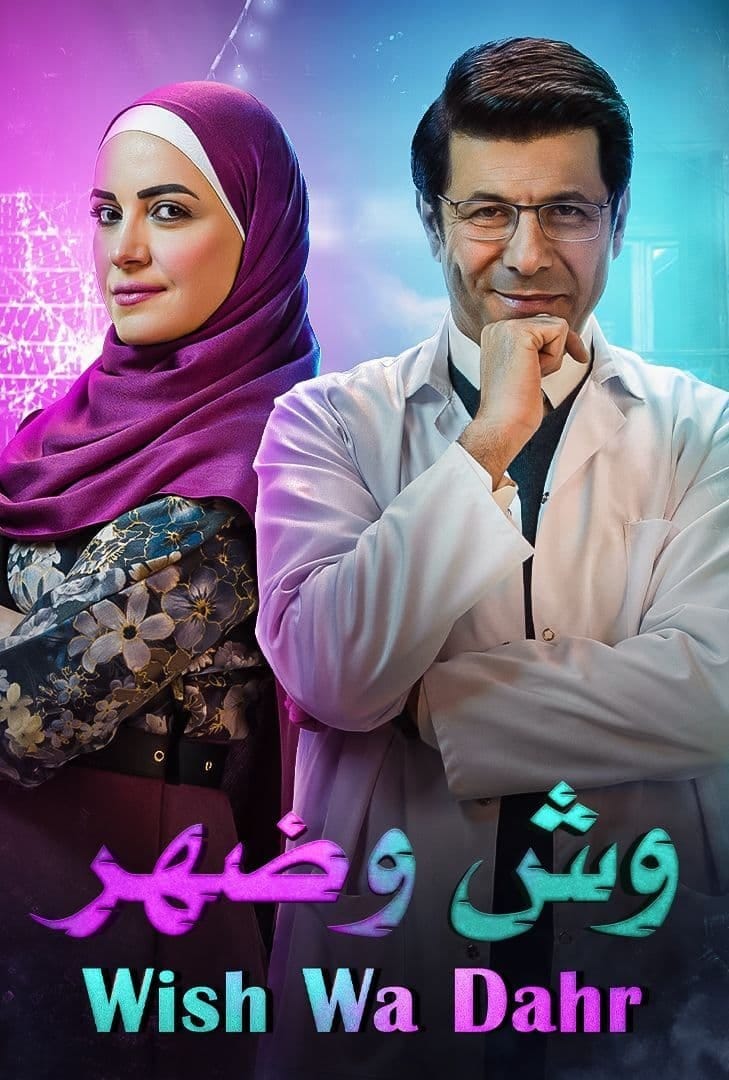
Wish Wa Dahr
A pharmacy storekeeper impulsively steals money and flees to Tanta. There, he impersonates a doctor and opens a makeshift clinic. On the other side, a young woman seeking a fresh start, takes on a secret identity as well, working both as a dancer and later the clinic's nurse.
Directed by Mariam Abu Ouf, this series is truly a clever portrayal of the complexity of life and humans in Egypt. It avoids narrative fluff, instead building tension and emotional payoff through thoughtful storytelling and character development. With just 10 episodes (each around 45 minutes), Wish Wa Dahr is the ideal size for a weekend binge: long enough to invest in the story, short enough to finish without dragging.
What to Eat
Sopung
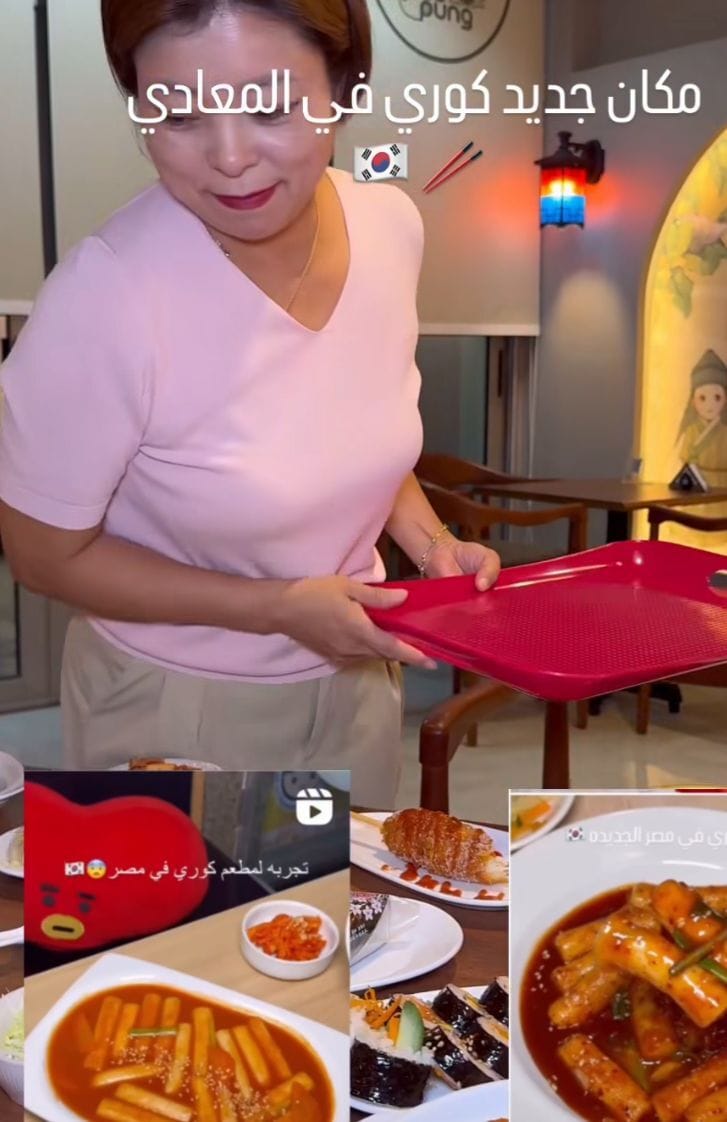
There’s a fresh buzz in Maadi’s dining scene, which is Sopung, the new Korean restaurant drawing attention from food enthusiasts across Cairo. If you’ve glimpsed its Instagram posts or TikTok clips, you’ve seen the excitement: authentic Korean flavors, stylish presentation, and a vibe that genuinely feels like a mini getaway to Seoul.
From what we can gather, one of the standout features of Sopung is how authentically Korean it feels, because it truly is. The restaurant is staffed by Koreans, visitors love that it's not just Korean-inspired, but that it’s also Korean-made in spirit and experience.
What to Visit

Tul8te
If summer has been slipping through your fingers and you still haven’t made that unforgettable memory, this is your moment. Hitmaker Tul8te is set to close out the New Alamein Festival on Friday, 29 August, and it promises to be the kind of night that defines the season. Don’t let the season end without one last story to tell, this is your chance to make it.

Citadel Festival
The 33rd edition of the Citadel Festival for Music and Singing has officially kicked off, bringing two weeks of performances to one of Cairo’s most iconic landmarks. Running until Saturday, 23 August, the festival transforms the historic Salah El-Din Citadel into a stage where heritage meets modernity, echoing with everything from classical opera to contemporary pop.
If you’re looking for a way to end the summer on a high note, don’t miss this chance to sit under the night sky and let the sounds of Egypt’s finest talents carry you away.
Saudi Spotlight
Music Festivals
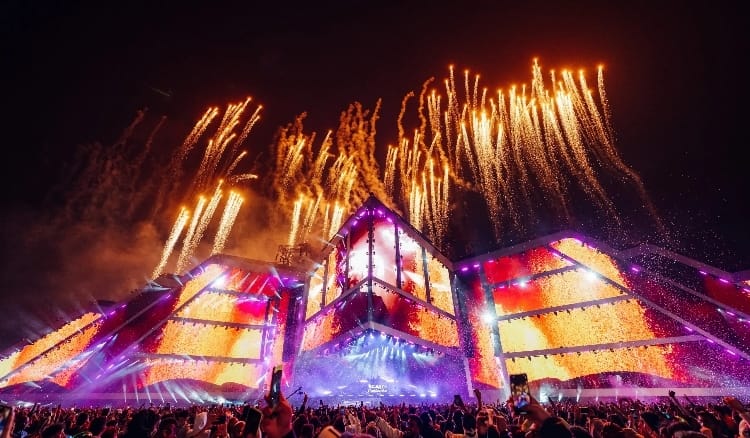
Since the creation of the General Entertainment Authority (GEA) in 2016, Saudi Arabia has rapidly emerged as a premier destination in the Middle East for live music and festival culture.
Scheduled for 25–26 September 2025, this event unfolds in the stunning desert landscape of AlUla, among world-class heritage sites. Organized by MDLBEAST as part of the AlUla Moments calendar, it promises dawn-till-dusk performances under an open sky themed “Until The Sun Comes Up”.
What’s most striking is how Saudi Arabia is reimagining itself through music. Starting with the launch of Soundstorm in 2019, drawing over 700,000 attendees, the kingdom has since built momentum through festivals across Riyadh, Jeddah, and AlUla, positioning itself as a vibrant live music capital.